How Much Does a Handyman Cost in Atlanta?
· By Christiano Rodrigues
Most homeowners do not call a handyman for one thing. They call because the list has been growing for months: a door that sticks, a running toilet, a hole in the drywall from a doorknob, a ceiling fan still sitting in its box. The question that comes before the phone call is always the same: how much is this going to cost?
The honest answer is that handyman prices in the Atlanta area depend on how the job is priced, what is on the list, and how much prep or material is involved. This guide walks through the ranges most homeowners typically see in 2026, how hourly and per-job pricing compare, what pushes a quote up or down, and how to get a clear number before any work starts.
Typical handyman rates around Atlanta in 2026
Across the Atlanta metro, most independent handymen and small handyman companies typically charge somewhere in the range of $60 to $125 per hour. Where a pro lands in that range usually reflects experience, insurance, whether they work alone or with a helper, and how specialized the task is. Simple assembly or hanging work tends to sit at the lower end, while carpentry, tile repair or anything that needs careful finishing tends to sit higher.
Many handymen also have a minimum charge, often equal to one or two hours of labor, because driving to a home, unloading tools and setting up takes time no matter how small the fix is. Some companies add a separate trip fee on top of that. Others, like Solve Handyman, do not charge a trip fee, so it is worth asking about both before you book.
Keep in mind these are general market ranges, not a quote. Two jobs that sound the same on the phone can be very different once someone sees the wall, the door frame or the fixture in person.
Hourly vs per-job pricing: which is better for you?
Handymen usually price work one of two ways. Hourly pricing means you pay for the time spent on site, plus materials. It works well for a long list of small, unpredictable tasks where nobody knows exactly how long each one will take. The downside is that the final number is less certain until the work is done.
Per-job pricing, sometimes called flat-rate pricing, means you agree on a set price for a defined task before work begins. Mounting a TV, replacing a faucet or patching a single drywall hole are good examples because the scope is clear. You know the cost up front, and the pro carries the risk if the job takes a little longer than planned.
In practice, many homeowners end up with a mix: a set price for the clearly defined items and an estimate for the rest. The best approach is the one that gives you a clear number in writing before anyone picks up a tool.
Common handyman jobs and what they typically cost
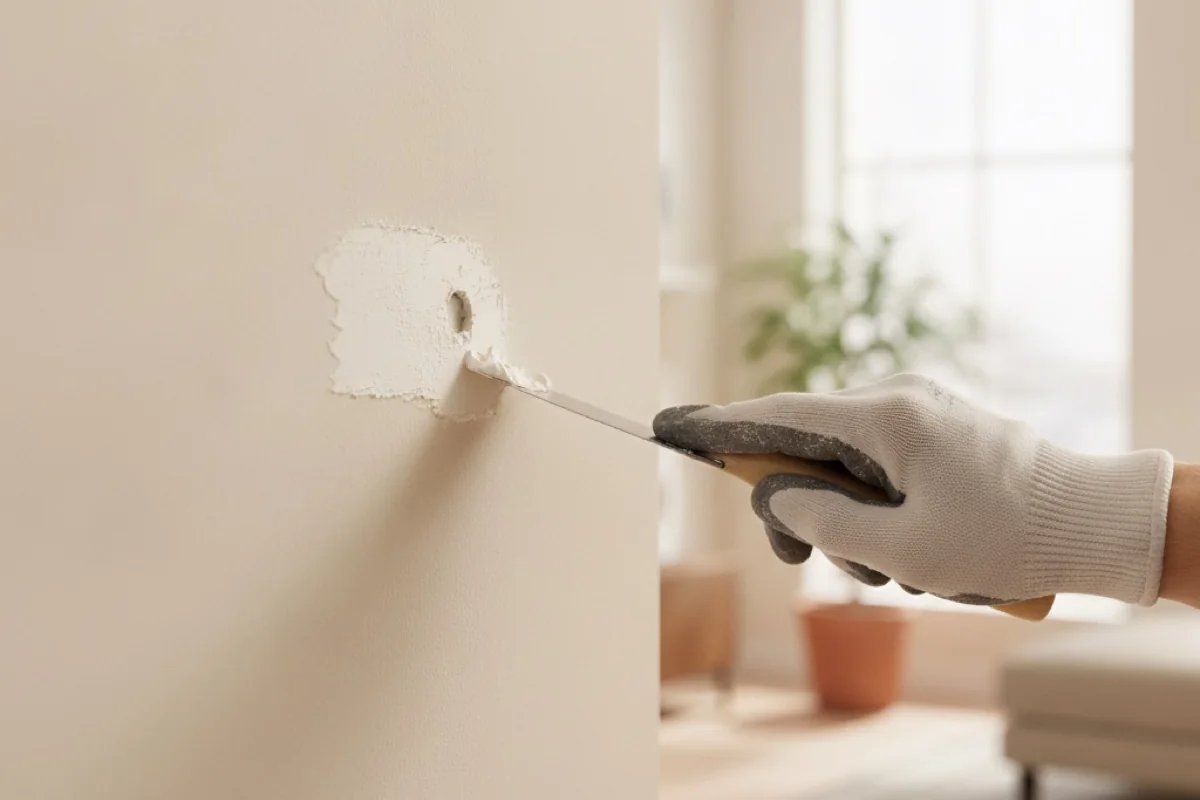
To give you a rough sense of scale, here are market-typical ranges for common jobs in the Atlanta area. Small drywall patches, like a doorknob hole or a few nail pops, often run about $100 to $300, while larger patches with texture matching and paint can go higher. Mounting a TV on drywall typically falls around $100 to $250, with more for concealed wiring or masonry walls. Assembling a piece of furniture is commonly $60 to $150 per item depending on size.
Swapping an existing ceiling fan or light fixture in the same location usually costs around $100 to $250 in labor, assuming the box and wiring are already in place. Minor plumbing fixture work, like replacing a faucet, a toilet fill valve or a garbage disposal, often lands between $100 and $300 plus parts. Interior door adjustments or hardware replacements tend to be on the lower end, while hanging a new prehung door costs more because of the trim and frame work.
Outdoor work varies widely. Replacing a few rotted deck boards or a fence section might be a few hundred dollars, while pressure washing a driveway or cleaning gutters on a one-story home is often in the low hundreds. Bigger exterior repairs depend almost entirely on what is found once the old material comes off.
What pushes a handyman quote up or down
Prep and access matter more than most people expect. A ceiling repair on a two-story foyer needs taller ladders or scaffolding. A deck board replacement turns into a bigger job if the joists underneath are soft. Moving furniture, protecting floors and cleaning up afterward all take time, and a good pro builds that into the price instead of surprising you later.
Materials are the other big variable. Builder-grade fixtures, standard paint and basic hardware keep costs down, while premium faucets, designer light fixtures or specialty tile raise them. Some homeowners buy their own materials to save money; just confirm with the handyman ahead of time that the parts are the right size and type for the job.
Finally, bundling helps. Because travel and setup are part of every visit, grouping several small repairs into one appointment usually costs less overall than calling someone out three separate times. That is the main reason a written repair list is so useful.
When a handyman is the right call (and when it is not)
A handyman is a great fit for repairs, installations and maintenance that do not require a specialty trade license or a permit: drywall, painting, carpentry, doors, trim, TV mounting, furniture assembly, minor tile and flooring repairs, deck and fence fixes, gutter cleaning and similar work. It is also the practical choice when you have a list of mixed tasks and do not want to coordinate several contractors.
Electrical and plumbing are where you should draw a clear line. Swapping an existing light fixture, ceiling fan, faucet or toilet part is normal handyman work. Running new circuits, adding outlets, moving plumbing lines or working on a water heater or electrical panel belongs to a licensed electrician or plumber. A trustworthy handyman will tell you when a job is outside their lane instead of guessing.
How to get a clear, reliable quote
Start by writing down every item you want handled, room by room, and take a few photos. Note anything you have already bought, like a fan or a faucet. The more detail you share, the more accurate the estimate will be, and the less likely you are to see changes later.
Then ask a few direct questions. Is there a trip fee or minimum charge? Is the price hourly, per job or a mix? Are materials included? Is the company insured? What happens if something is not right after the work is done? Those answers tell you as much about the business as the number itself.
At Solve Handyman, estimates are free, there is no trip fee, and same-day service is available for many repairs. The team is insured and family-owned, speaks English, Portuguese and Spanish, and stands behind the work: if something is not right, they come back and redo it at no cost. Homeowners from Marietta and East Cobb to Roswell, Alpharetta, Sandy Springs and Buckhead can send their list and get a clear number before anything starts. Call or text (770) 744-7051 to get your free estimate.
Frequently asked questions
- How much does a handyman charge per hour in Atlanta?
- Most handymen in the Atlanta area typically charge around $60 to $125 per hour, depending on experience, insurance and the type of work. Many also have a minimum charge for small jobs. The most reliable way to know your cost is a free estimate based on your actual repair list.
- Is it cheaper to pay a handyman by the hour or by the job?
- It depends on the work. Per-job pricing is usually better for clearly defined tasks like mounting a TV or replacing a faucet, because you know the cost up front. Hourly pricing can make sense for a long list of small, unpredictable repairs. Many homeowners get a mix of both.
- Do handymen charge a trip fee?
- Some do and some do not. Trip fees and minimum charges are common in the industry, so always ask before booking. Solve Handyman does not charge a trip fee, and estimates are free.
- Can a handyman do electrical and plumbing work?
- A handyman can usually handle minor fixture work, such as swapping an existing light fixture, ceiling fan, faucet or toilet part. New wiring, new circuits, moving plumbing lines and water heater or panel work should go to a licensed electrician or plumber.
- How can I lower the cost of handyman repairs?
- Group several small repairs into one visit, share a detailed list with photos ahead of time, and confirm whether materials are included. Bundling reduces repeated travel and setup time, which usually brings the overall cost down.
Found this helpful? Make us a preferred source on Google.
Ready for an exact price?
Get a free, no-pressure in-home estimate. Real numbers for your home, not a phone guess.