
Milton Home & Property Upkeep Guide
· By Christiano Rodrigues
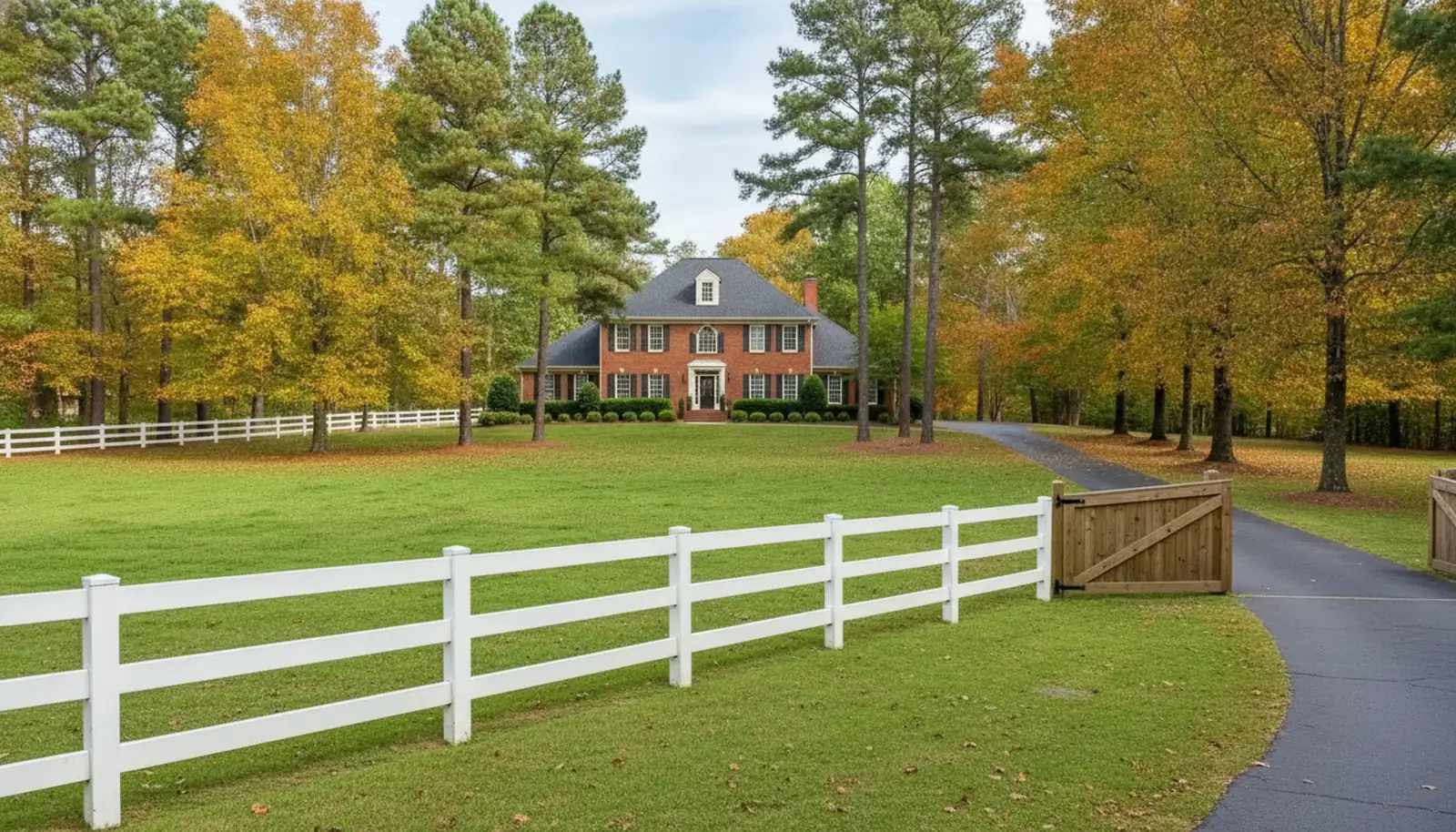
Owning a home in Milton usually means owning more than a house. There is the lawn that takes a whole afternoon to mow, the fence line that disappears into the trees, the gate at the end of a long driveway, a deck or screened porch, and often a barn, shed or detached garage. All of it sits outside in Georgia weather, and all of it wears out on its own schedule.
The good news is that most of that wear is predictable. Pollen, humidity, summer storms, falling leaves and the occasional hard freeze hit Milton properties in roughly the same order every year. If you know what each season does to wood, paint, gutters and hardware, you can catch small problems while they are still small. This guide walks through the year, season by season, with notes on what you can reasonably do yourself and when a repair is worth handing off.
Why upkeep looks different on a Milton property
Milton is the most rural part of north Fulton. Along Birmingham Highway, Freemanville Road and Hopewell Road, and out toward Providence and Bethany, you still find horse farms, pastures and wooded lots measured in acres. Closer to Crabapple, Deerfield and estate communities like White Columns, homes are large custom or semi-custom builds with a lot of exterior trim, big decks and multiple garages. Around Arnold Mill, you get a mix of both.
What these properties share is scale. A typical suburban house might have one short fence run and a small patio. A Milton property can have hundreds of feet of board fencing, a wide driveway gate, outbuildings with their own doors and hinges, and far more painted wood exposed to sun and rain. Maintenance is less about any single big repair and more about staying ahead of dozens of small ones before they stack up.
Spring: pollen, mildew and the first walkaround
Spring in Georgia starts with a yellow coat of pine pollen on everything: decks, porches, cars, siding and driveways. It washes off in the rain, but it also feeds the mildew and algae that show up on the shady north side of houses, on fence boards and on porch ceilings. Spring is the right time to clean exterior surfaces, once the heaviest pollen has dropped, so you are not washing twice.
It is also the best time for a full walkaround after winter. Look for fence boards that split or popped loose, posts that lean after wet months in clay soil, gates that now drag or will not latch, and deck boards that cupped or lifted nails. Check trim around windows, doors and garage doors for soft spots, since wood rot usually starts at the bottom corners where water sits.
DIY: hosing off pollen, tightening a few loose screws, clearing debris from deck gaps and re-nailing a single fence board. Call a pro: pressure washing large areas like long driveways, motor courts and siding, where the wrong pressure can etch concrete or force water behind siding, plus replacing rotted trim or several fence sections at once.
Summer: humidity, storms and sun on the wood
Milton summers are hot and humid, with afternoon thunderstorms that can drop a lot of rain fast. That combination is hard on anything made of wood. Stain and paint fade quickly on fences and decks in full sun, while shaded areas stay damp and grow mildew. Interior doors may start to stick as the house absorbs humidity, and exterior doors can swell enough to rub the frame.
Storms bring their own list. Heavy wind can knock down limbs onto fences and outbuildings, and runoff can wash out the edges of long driveways or clog culverts with leaves and debris. After a big storm, it is worth walking the fence line and the driveway instead of waiting until something fails.
Summer is also prime season for deck and porch work, because the wood is dry enough to stain or seal properly. If your deck boards look gray and fuzzy, or water soaks in instead of beading, it is time to clean and reseal.
DIY: checking for downed limbs, cleaning out a culvert entrance, planing a sticky interior door edge if you are comfortable with it. Call a pro: replacing broken deck boards and loose railings, rehanging a sagging gate, staining or sealing a large deck or long fence line, and repairing storm damage to sheds and barn doors.
Fall: leaves, gutters and getting ready for winter
Fall is when Milton properties earn their reputation for being a lot of work. The same tall hardwoods and pines that make the area beautiful fill gutters, cover roofs, pile up against fence lines and clog drains. Full gutters overflow during fall rains, and that water soaks the fascia, rots trim and splashes red clay onto siding and walks.
Plan on cleaning gutters at least once after most of the leaves have dropped, and more often if large trees hang over the roof. While you are up there, look for gutters pulling away from the fascia and downspouts that dump water right next to the foundation.
Fall is also a good window for exterior caulking and paint touch-ups, because temperatures are mild and humidity drops. Seal gaps around windows and doors, touch up peeling paint on shutters and trim, and replace worn weatherstripping on garage and entry doors before the cold arrives.
DIY: raking leaves away from fence bottoms, clearing ground-level drains, replacing a door sweep. Call a pro: gutter cleaning on two-story homes and steep roofs, where ladder work is the real risk, plus trim replacement and painting at height.
Winter: mild days and the occasional hard freeze
Winters in Milton are mostly mild, but a few nights below freezing each year can still cause trouble. Outdoor hose bibs in barns, sheds and detached garages are the most common weak spot, especially on lines that run to water troughs or wash areas. Disconnect hoses, shut off and drain exterior lines where you can, and insulate exposed pipes.
Winter is also the slow season outside, which makes it a smart time to tackle inside projects. Larger homes often have a list that grew all year: a ceiling fan that wobbles on a tall ceiling, crown molding that separated, drywall cracks from settling, TVs and art that still need mounting, rooms that need fresh paint. Getting those done in January leaves spring free for the outdoor work.
Notes for landlords and second properties
If you rent out a Milton home, or own a property you do not live in full time, the seasonal list matters even more, because small issues go unnoticed longer. A running toilet, a gutter that overflows over the front door, or a gate left dragging can turn into a bigger repair before anyone reports it. A simple routine helps: a spring and fall walkthrough of the exterior, gutters cleaned after leaf drop, and a quick check of doors, fixtures and smoke detectors between tenants.
When one crew makes sense
The hardest part of keeping up a big property is not any single repair. It is coordinating a fence person, a painter, a gutter cleaner and a pressure washer, each on their own schedule. Many Milton owners prefer one insured crew that can walk the property, make a list and handle it in one visit or on a seasonal schedule.
That is what we do at Solve Handyman. We are a family-owned team based in Marietta, insured, with free estimates and no trip fee. Same-day service is available when the schedule allows, and if something we did is not right, we redo it at no cost. We speak English, Portuguese and Spanish, which helps when a farm manager or house staff meets us on site. You can see the kinds of jobs we handle locally on our Milton handyman page at /handyman-milton-ga/, or just text photos of your list to (770) 744-7051 for a free estimate.
Frequently asked questions
- How often should I clean gutters on a wooded Milton lot?
- At least twice a year is a good baseline: once in late spring after pollen and seed pods drop, and once in late fall after most leaves are down. Homes with large trees hanging over the roof may need an extra cleaning during fall.
- When is the best time to stain or seal a deck or fence in Milton?
- Late spring through early fall, during a stretch of dry days, is usually best. The wood needs to be clean and dry, and the stain needs a few days without rain to cure properly.
- What should I check on my property after a summer storm?
- Walk the fence line for downed limbs and broken boards, check gates for sagging, look at the edges of long driveways for washouts, clear culverts of debris and look at gutters and downspouts for damage or pulling away from the house.
- How do I protect barn and shed pipes from a freeze?
- Disconnect hoses, shut off and drain exterior lines where possible, and insulate any exposed pipes in barns, sheds and detached garages. A few hard freezes each winter are enough to crack an unprotected line.
- Can one handyman handle fences, decks, gutters and interior repairs on a large property?
- Yes. Solve Handyman handles fence and gate repair, decks, trim, painting, pressure washing, gutter cleaning and interior fixes in one visit or on a seasonal schedule. Estimates are free and there is no trip fee.
Found this helpful? Make us a preferred source on Google.
Ready for an exact price?
Get a free, no-pressure in-home estimate. Real numbers for your home, not a phone guess.