
Kennesaw Home Maintenance Guide: What Breaks, Season by Season
· By Christiano Rodrigues
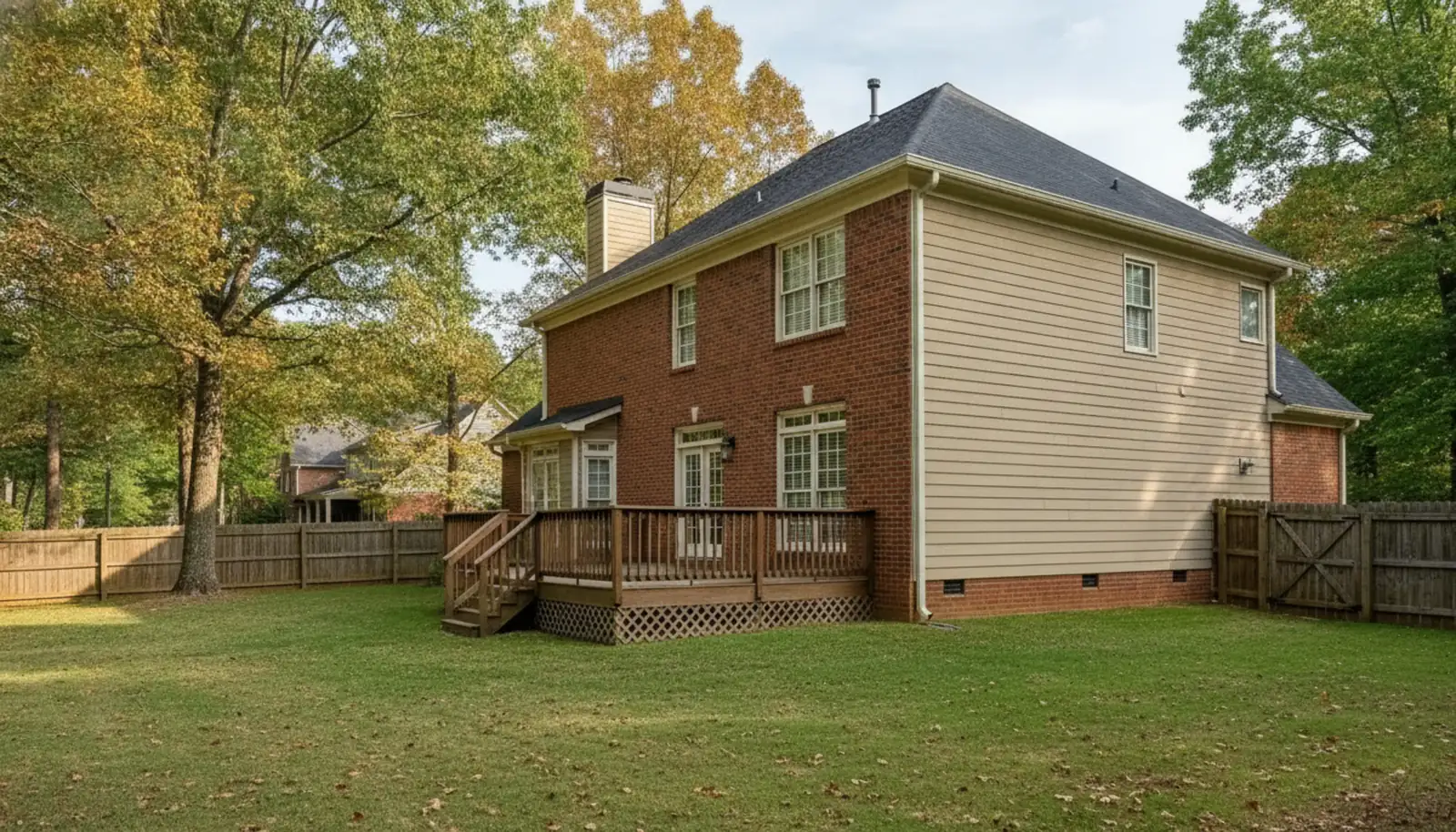
Most Kennesaw homes do not fail all at once. They wear down in small, predictable ways, and the pattern follows the calendar. Pollen piles up in spring, summer storms test the gutters and the fence, fall buries the roofline in leaves, and a cold snap in January finds the one hose bib nobody disconnected.
This guide walks through the year the way a Kennesaw house actually experiences it. It is written for homeowners in the subdivisions off Chastain Road and Jiles Road, for families near the Kennesaw Mountain area, and for landlords with rentals around the Kennesaw State University area. For each season you will find what usually breaks, what is reasonable to fix yourself, and the point where it is smarter to hand it off.
Know your house first: the typical Kennesaw home
A large share of Kennesaw housing went up during the growth years of the 1980s, 1990s and 2000s. You see a lot of split-levels, ranches and two-story traditionals on quarter-acre lots, usually with a wood privacy fence around the backyard and a pressure-treated deck off the kitchen. Townhomes and rentals cluster closer to campus, Barrett Parkway and Cobb Parkway.
That age range matters. A house built 25 to 40 years ago has drywall that has settled, interior doors that no longer sit square in their frames, original or second-generation faucets and toilets, and exterior wood that has been through a few decades of Georgia humidity. None of that is a crisis. It just means the same short list of repairs shows up again and again, and a little seasonal attention keeps it short.
Spring: pollen, gutters and the first fence check
Spring in Cobb County means the yellow coat. Pine and oak pollen settles on everything from roughly March into April, and on homes with heavy tree cover it washes into the gutters, sticks to siding and turns decks slick and green. Once the pollen drops, that is the right moment for the outdoor reset: clear the gutters of seed pods and spring debris, rinse or pressure wash the driveway, walkway and siding, and wash the deck before you decide whether it needs sealing.
Spring is also when you find out what winter did. Walk the fence line and push gently on each post. A post that moves more than an inch at the top is losing its grip in the clay. Look for loose boards and gates that drag. Inside, check caulk lines around tubs and showers, since winter tends to open small gaps.
DIY friendly in spring: rinsing the deck, recaulking a tub, replacing HVAC filters, tightening gate hinges. Better handed off: gutter cleaning on a second story roofline, pressure washing painted or older wood surfaces where too much pressure can strip or gouge, and resetting fence posts that have started to lean.
Summer: humidity, storms and red clay
Kennesaw summers are hot and humid, and the afternoon thunderstorms can drop a lot of water in a short time. That is when weak spots show up. Gutters that were only half clear overflow and dump water right at the foundation, which splashes red clay up onto siding and can push moisture toward a crawlspace or basement wall. Downspouts that end right next to the house make it worse. Extending them a few feet away from the foundation is one of the cheapest, most effective summer projects there is.
Humidity is also hard on wood. Deck boards cup, railings loosen as fasteners work back and forth, and trim around windows and doors can start to soften where paint has cracked. Push a screwdriver into any suspicious spot on exterior trim. If it sinks in easily, that is wood rot, and it spreads. Catching it while it is one piece of trim is far easier than catching it after it reaches the framing.
For rental owners near the Kennesaw State University area, summer is turnover season, and timing matters more than anything else. A unit that sits empty in July often misses the fall move-in wave.
Fall: leaves, gutters and getting ready for cold
Fall is the busiest gutter season in Kennesaw, especially on lots near Kennesaw Mountain National Battlefield Park and Swift-Cantrell Park where mature hardwoods hang over the roof. One cleaning after most of the leaves have dropped, usually late October into November depending on the year, does more good than two early cleanings that miss the real load. If your trees are heavy, plan on checking again before the first hard freeze.
This is also the season to prepare for winter. Replace worn weatherstripping, especially on the door from the garage into the house, and paint or seal exposed exterior wood while dry, mild days still allow coatings to cure. It is a good window to seal a deck or fence you washed in spring.
DIY friendly in fall: replacing door sweeps, raking leaves away from the foundation, cleaning dryer vents. Better handed off: anything on a ladder above the first floor, repainting exterior trim that shows soft spots, and replacing sections of deck or fence where the wood has started to fail.
Winter: mild most days, but watch the freezes
Kennesaw winters are mild most of the time, which is exactly why the occasional hard freeze catches people off guard. Before the first night in the 20s, disconnect garden hoses from outdoor spigots, and if you have a shutoff for exterior faucets, use it. Pipes in an unheated garage, crawlspace or exterior wall are the ones most likely to have trouble. On a hard freeze night, letting a faucet on an exterior wall drip and opening the sink cabinet doors can help.
Winter is also when indoor issues get noticed, simply because everyone is home: doors that will not latch, running toilets, a disposal that hums but will not spin. Handling them now keeps them off the spring list, and it is a good season for indoor painting and drywall patches.
DIY or call a pro: a simple rule of thumb
A good homeowner can handle a lot of this list. The questions to ask before you start are simple. Is it above the first floor or on a roof? Does it involve water lines you cannot easily shut off? Will a mistake be visible every day, like a drywall patch in a hallway that never quite blends? Is it a rental where the result has to hold up to the next tenant? If the answer to any of those is yes, it is usually worth getting a free estimate before you buy materials.
It also helps to batch small jobs. A running toilet, a sagging gate, a ceiling fan and two drywall holes become one efficient visit instead of four weekends, which is especially useful for landlords between tenants.
When you would rather hand the list off, our Kennesaw handyman page covers the repairs we handle most in town, from fences and decks to drywall, painting and rental turnovers near campus. Solve Handyman is family-owned and insured, based just down I-75 in Marietta, and we speak English, Portuguese and Spanish. Estimates are free, there is no trip fee, same-day service is available when the schedule allows, and if something is not right we redo it at no cost. Call or text photos to (770) 744-7051.
Frequently asked questions
- When should I clean my gutters in Kennesaw?
- Most Kennesaw homes do well with a cleaning in late spring after the pollen and seed pods drop, and another in late fall after most leaves are down. Homes with heavy tree cover, such as those near the Kennesaw Mountain area, may need an extra check before winter.
- Why does my wood privacy fence keep leaning?
- Georgia red clay holds water, and years of wet and dry cycles loosen posts or rot them at ground level. Storms then push on the fence panels like a sail. If the post is still solid it can often be reset or reinforced; if it is rotted at the base, that section usually needs a new post.
- How do I protect outdoor pipes during a Kennesaw freeze?
- Disconnect garden hoses, close any interior shutoff for exterior spigots and drain them, and pay attention to pipes in garages, crawlspaces and exterior walls. On the coldest nights, a slow drip and open sink cabinets on exterior walls can help.
- What should landlords near Kennesaw State University fix first between tenants?
- Start with anything that affects safety or function, such as doors, locks, leaks and fixtures, then patch and paint walls, repair flooring, deep clean and remove anything left behind. Move-outs often follow the school calendar, so scheduling the work early in late spring and summer helps avoid empty weeks.
- Is it worth pressure washing my house after pollen season?
- Yes, for most homes. Pollen and red clay splash build up on siding, walkways and decks and can encourage mildew in humid weather. The pressure and technique should match the surface, since painted wood and older siding need a gentler approach than concrete.
Found this helpful? Make us a preferred source on Google.
Ready for an exact price?
Get a free, no-pressure in-home estimate. Real numbers for your home, not a phone guess.